
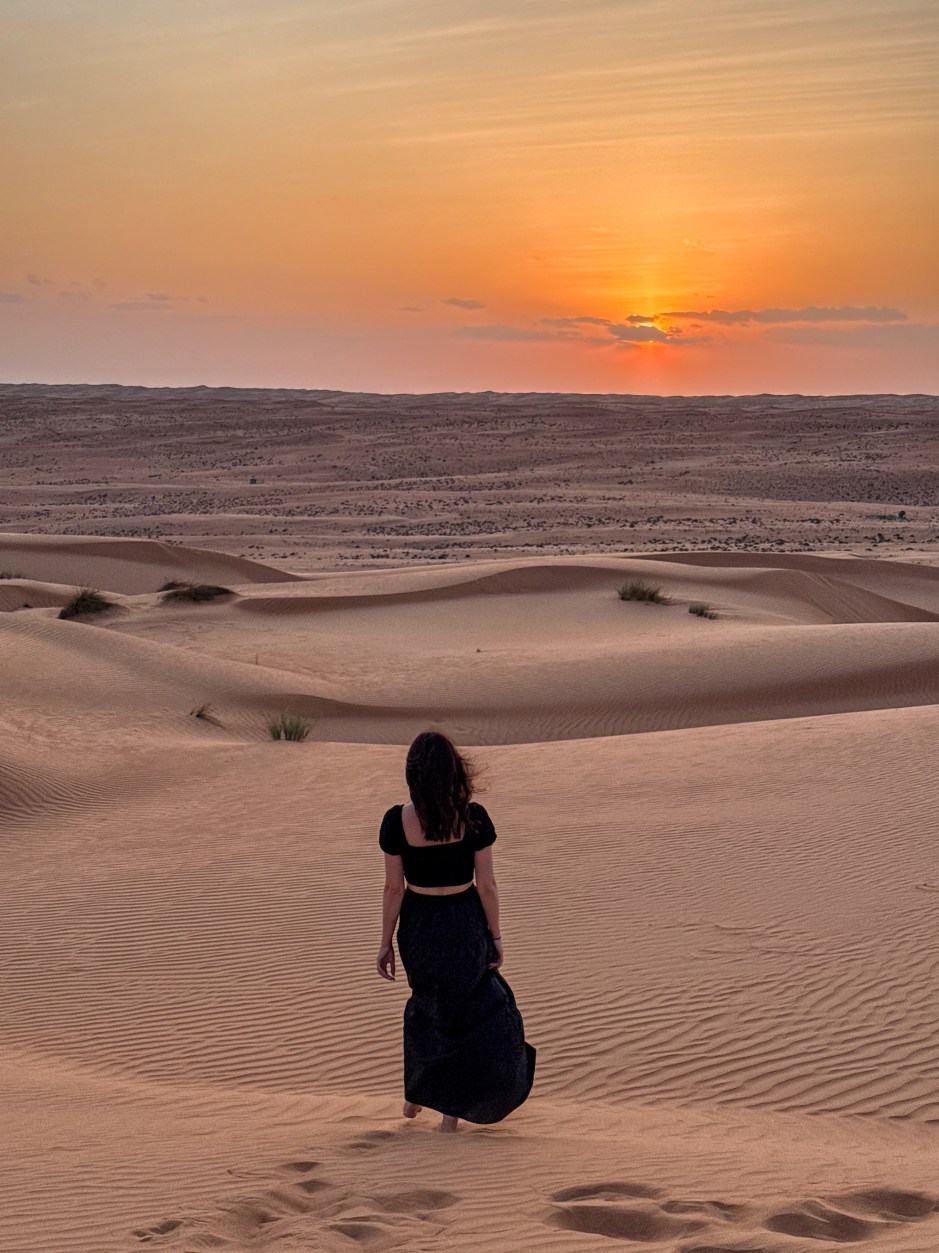
Nestled on the southeastern edge of the Arabian Peninsula, Oman is a country where ancient history meets dramatic natural beauty. Often overlooked in favor of its flashier neighbours, Oman offers something truly unique: a rich cultural heritage, stunning desert landscapes, pristine coastlines, and a warm, welcoming people. Whether you’re wandering through the labyrinthine alleys of Muscat’s souks, camping under the stars in the Wahiba Sands, or trekking the rugged peaks of the Hajar Mountains, Oman feels like a journey back in time.
Our trip started in Muscat, and we went as far south as Wahiba Sands, and then east out to the desert castles of Nizwa. Below is my complete guide to this part of Oman, filled with the best wadis, beaches, forts, island day trips, souks, and travel tips.


Quick Facts About Oman
- Currency: Omani Rial (OMR) – 1 OMR ≈ 1.95 GBP
- Language: Arabic (English is widely spoken, especially in cities and tourist areas)
- Religion: Islam. Make sure to check when Ramadan is before travelling.
- Time Zone: Gulf Standard Time (GMT +4) – no daylight saving time
- Best SIM Cards: Omantel and Ooredoo, or if you prefer eSim, I was using Airalo.
Why visit Oman
There are so many reasons but here are few:
Oman offers a range of landscapes—from rolling sand dunes and dramatic mountain peaks to serene turquoise beaches, historic forts, majestic mosques, and lush wadi oases. The diversity is truly incredible.
It’s also an ideal destination for a road trip. The roads are in excellent condition, driving is straightforward, and most key sights are within a few hours of each other, making travel both easy and rewarding.
What really sets Oman apart, though, is its people. Warm, humble, and deeply generous. Also, if you’re looking for a destination that offers an authentic cultural experience, unlike its flashier neighbours, it has preserved its traditional charm.
When is the best time to visit Oman
October-March (high season) – Even in high season, Oman is not busy compared to other travel destinations. Temperatures are comfortable this time of the year as you avoid the sweltering heat of the scorching summer months. I visited in February and found the weather to be perfect, and the tourist crowds were minimal. Avoid visiting during summer as it can be very hot and some things are not available, like tours to Daymaniyat Islands or desert camps.
Places to Stay
To explore the majority of Oman, the best place to stay is in Muscat, as the best hotels are located there. You can easily organise day trips from there, with the exception if you want to stay in the desert.
Here are some of the suggestions: Al Bustan Palace | Jumeirah Muscat Bay | Shangri-La Al Husn | W Muscat | The Chedi Muscat | Kempinski | JW Marriott | Sheraton Oman Hotel |
MUSCAT
DAY 1-2

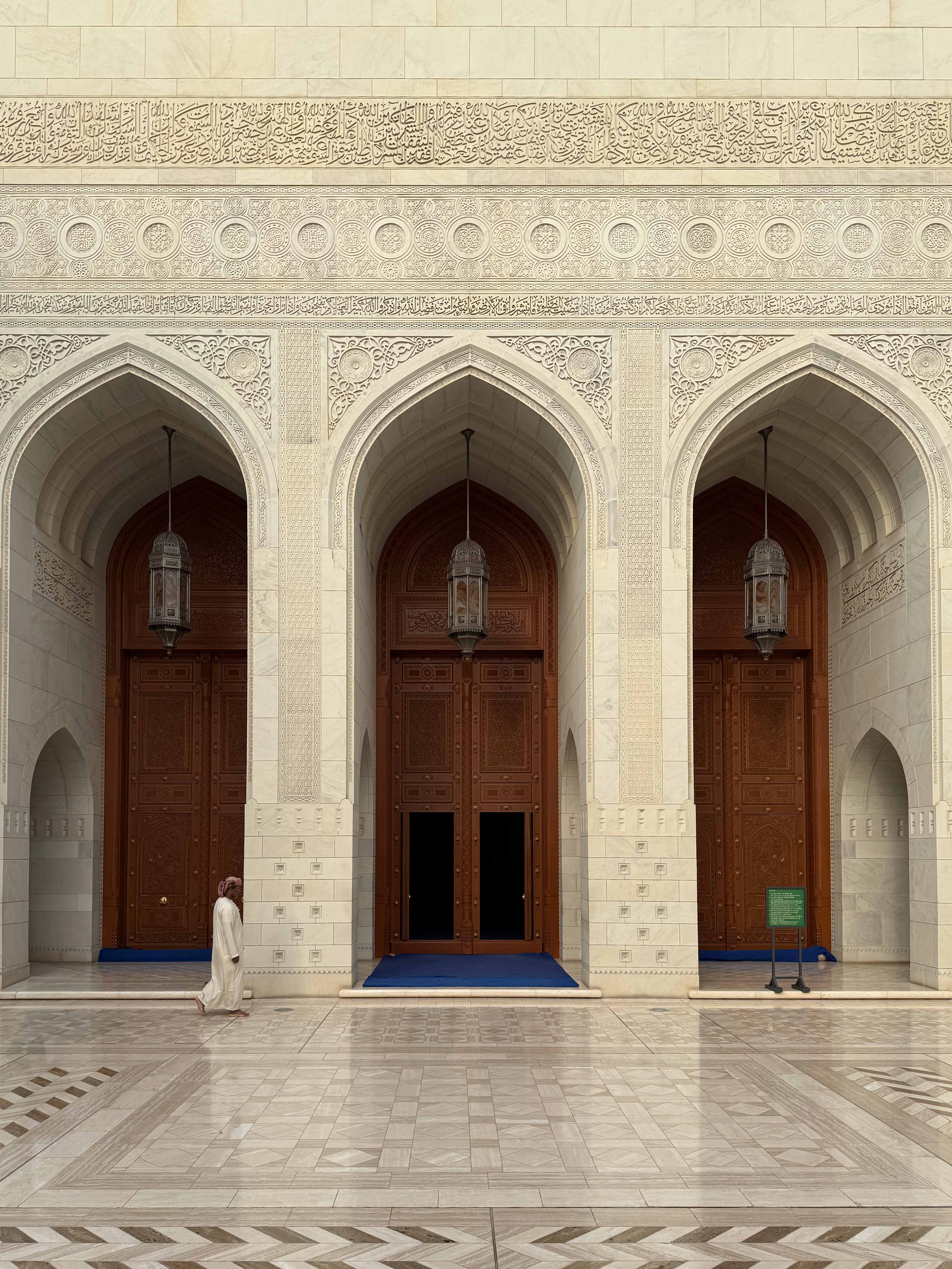


Muscat is where most travellers begin and end their journey through Oman—and for good reason. Situated along the Gulf of Oman, the capital’s central location makes it an ideal base for exploring nearby attractions and taking day trips.
Spending at least two days in Muscat is a great way to experience its highlights—from scenic beaches and vibrant souqs to impressive mosques and a boat trip to the stunning Daymaniyat Islands. Also, if comfort is important for you, I would suggest making Muscat your base for as long as possible and taking day trips because the best hotels are situated in Muscat.
What to See
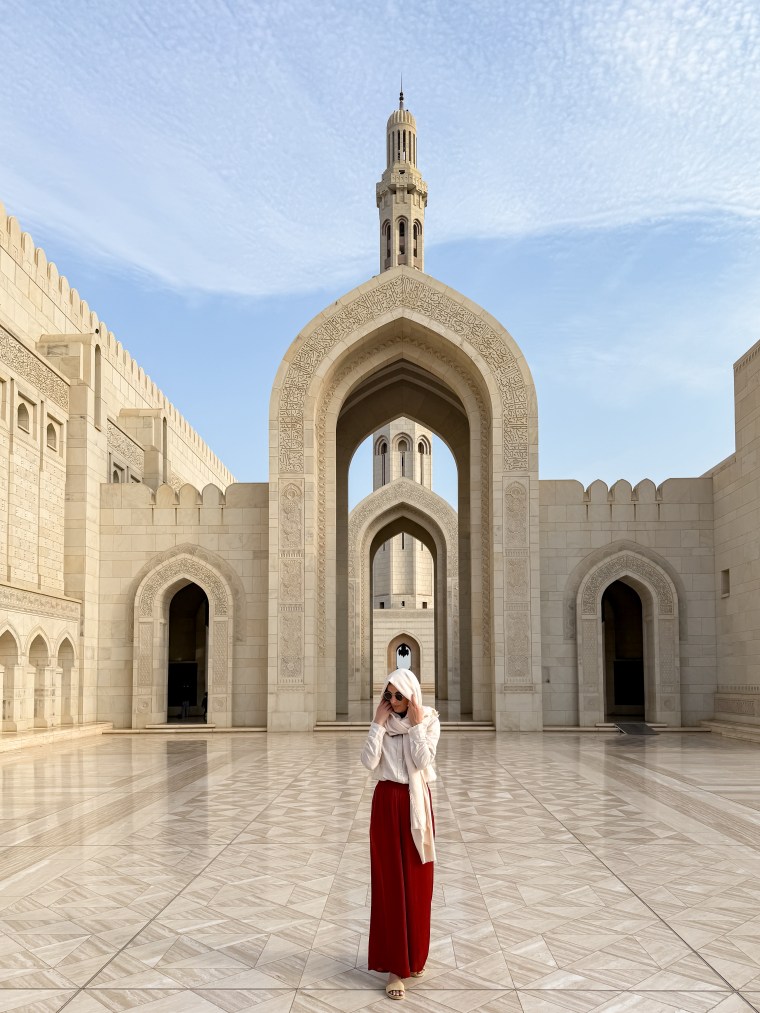
Sultan Qaboos Grand Mosque
Royal Opera House Muscat
Al Alam Palace
Mutrah Souq
Mutrah Corniche
Yiti Viewpoint
Bandar al Khairan
Qurum Beach
Restaurants
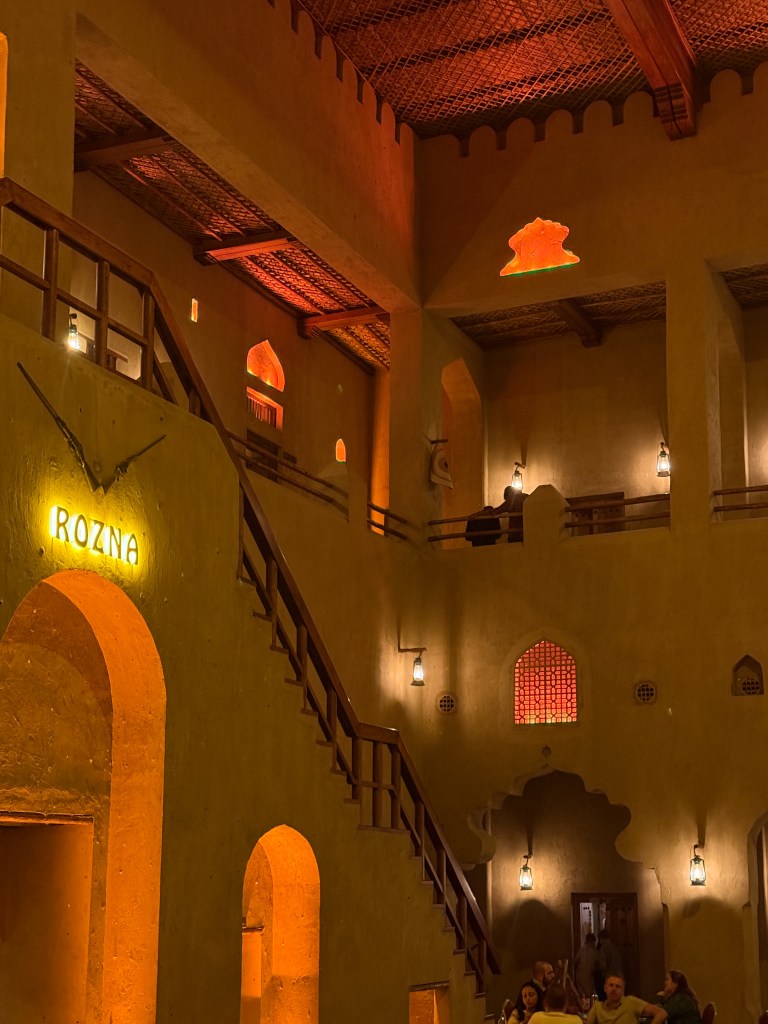
Bait Al Luban | The Pavilion | Turkish House | Aram | The Edge | Rozna | Zorba | Ba Ban | Bait al Bahr | Zahr El Laymoun|
Brunch
D’Arcy’s Kitchen | Dukanah Cafe | Mani’s Cafe | Mint & Coco | Nana’a
DAYMANIYAT ISLANDS
DAY 3
The Daymaniyat Islands were hands down one of the highlights of my time in Muscat. Just a quick 30-minute boat ride from the city, you suddenly find yourself in paradise—nine little islands surrounded by impossibly clear water and colourful coral reefs. I spent the day snorkelling alongside turtles, swimming in calm lagoons, and wandering barefoot on untouched beaches. If you’re looking for that Maldives-style sparkle without leaving Oman, this is the spot. We took a day trip through GetYourGuide, and it was plenty of time for swimming, snorkelling and mini-hikes on the islands.
NIZWA
DAY 4
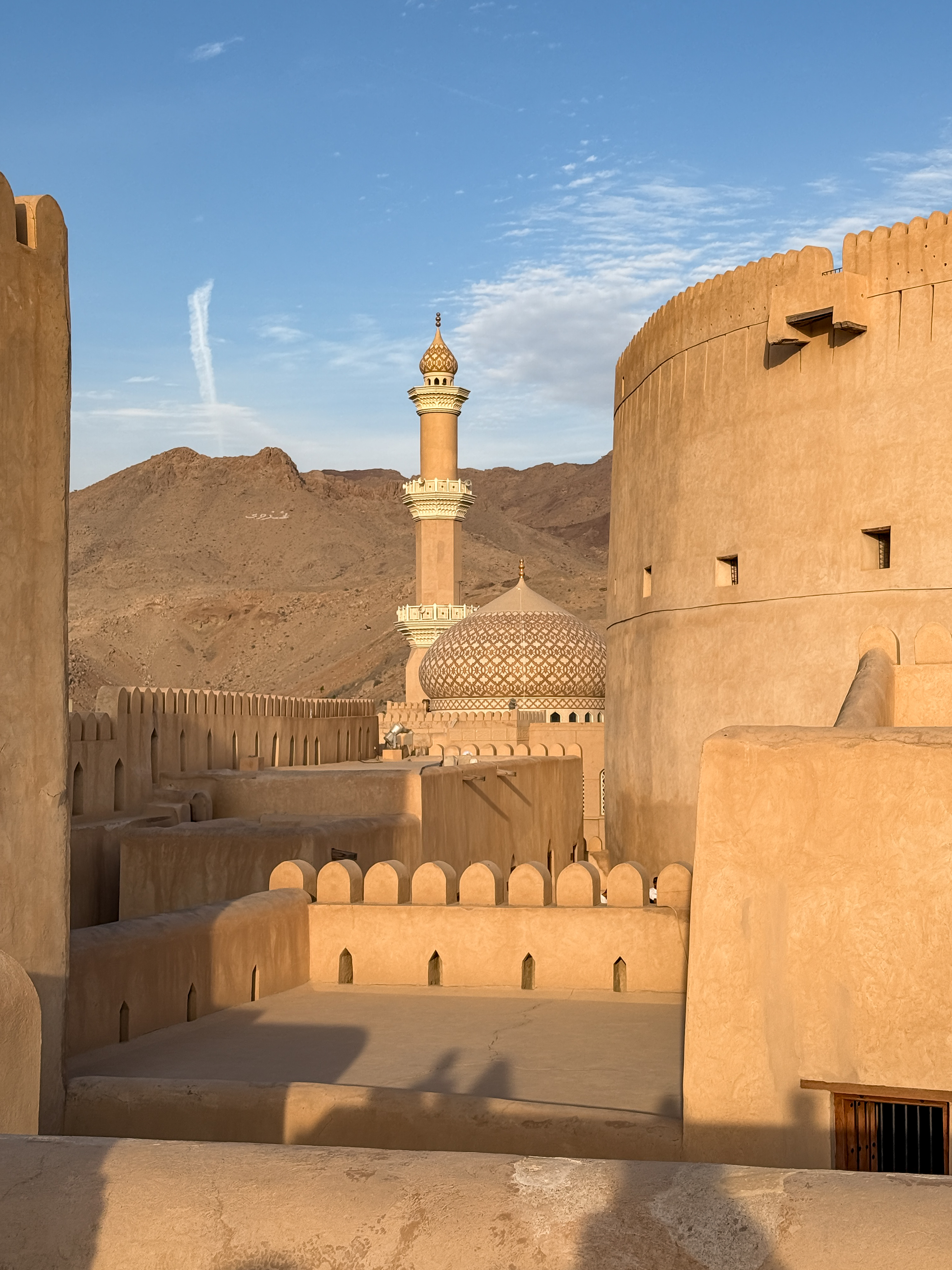
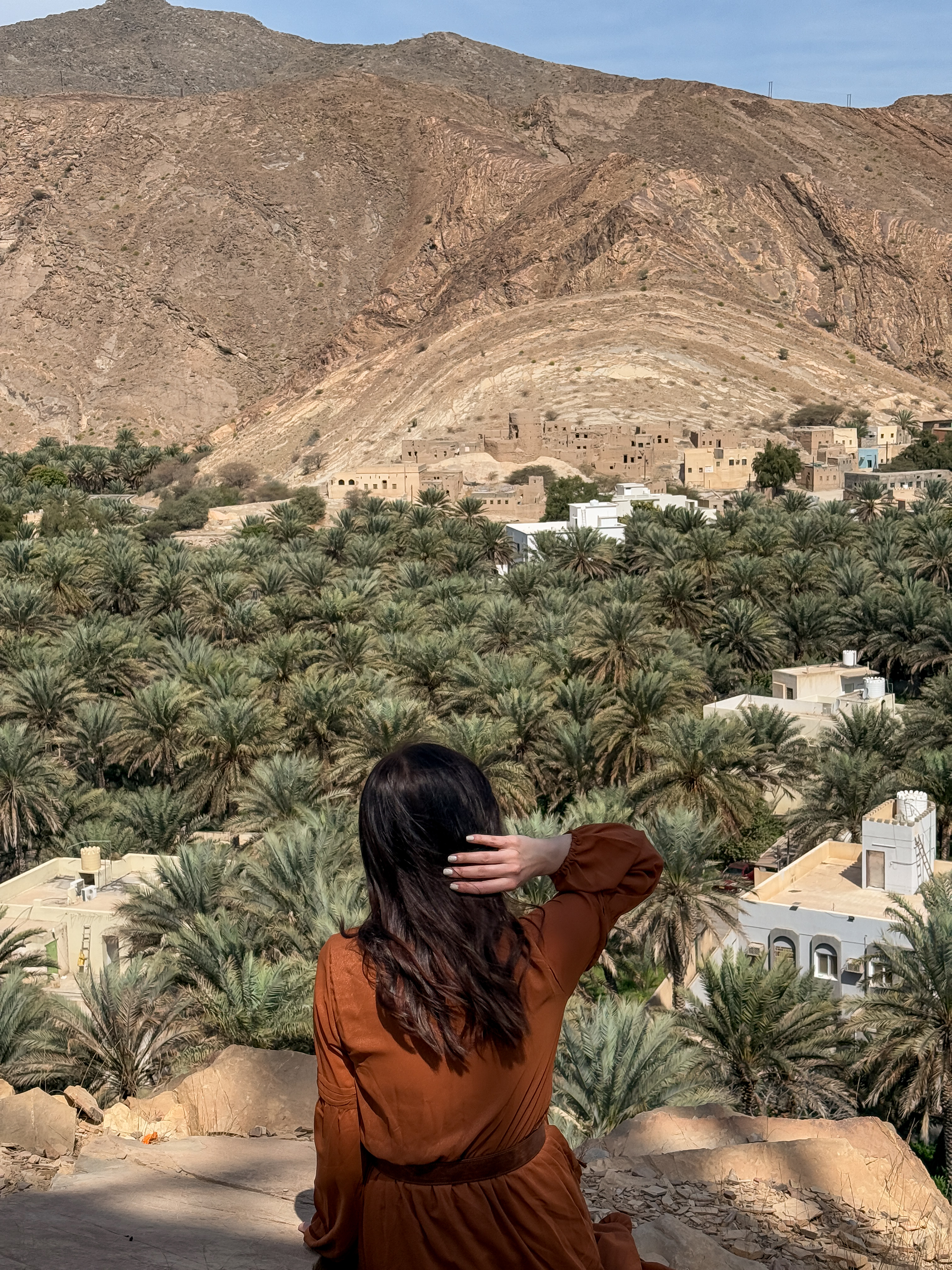
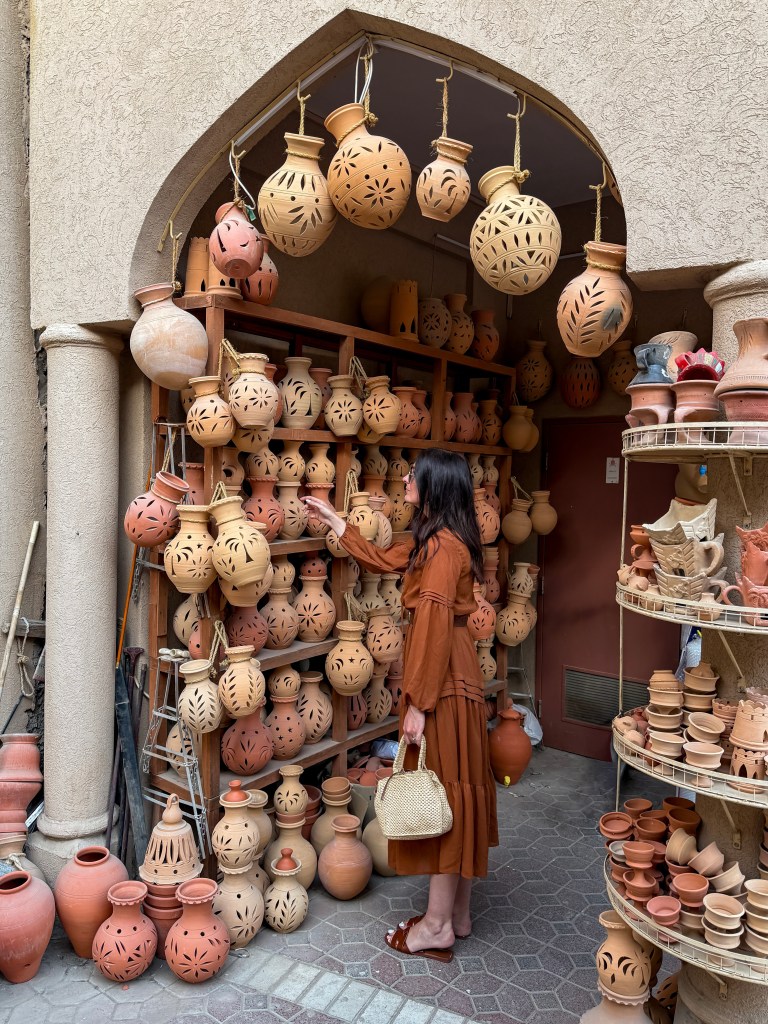
Once Oman’s capital, Nizwa is now a lively desert town wrapped around a huge fort and a maze-like souq. It’s the kind of spot where you can wander slowly, chat to local vendors, and get a real feel for traditional Omani life, all while being surrounded by mountains and palm tree oases.
Nizwa is a driving distance from Muscat, so great for a day trip, but you can also stay there or in the nearby Jebel Akhdar mountains.
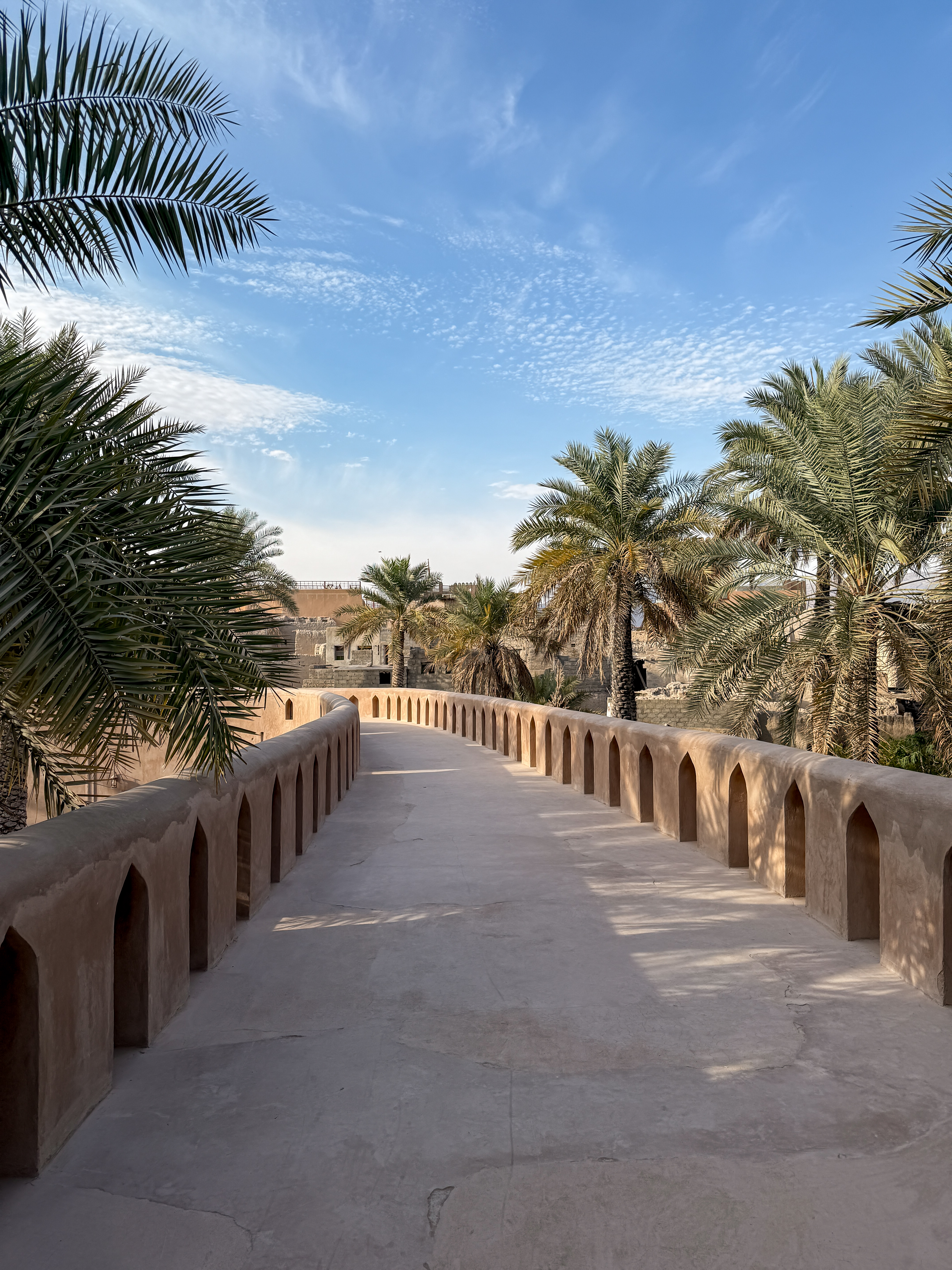
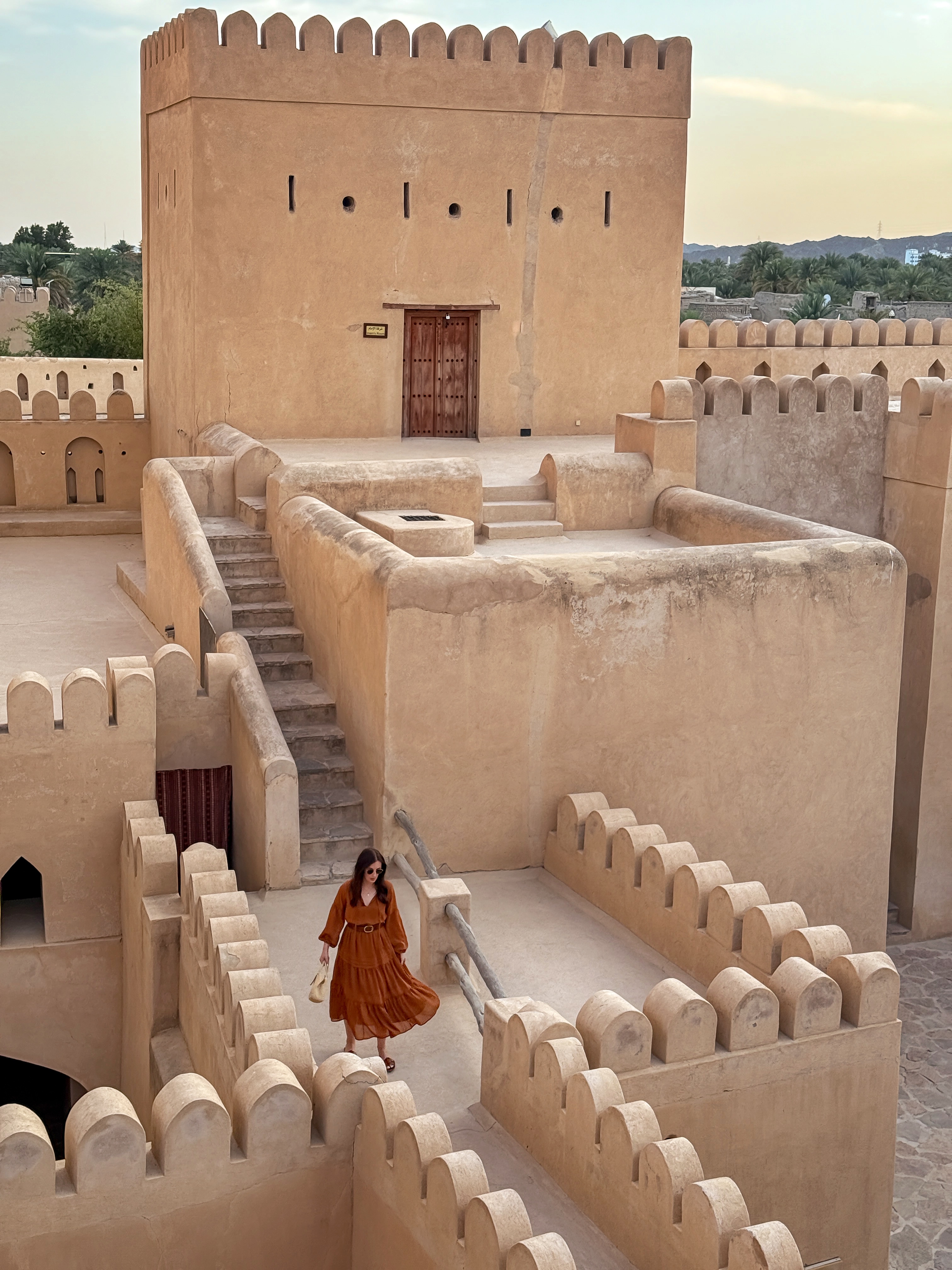
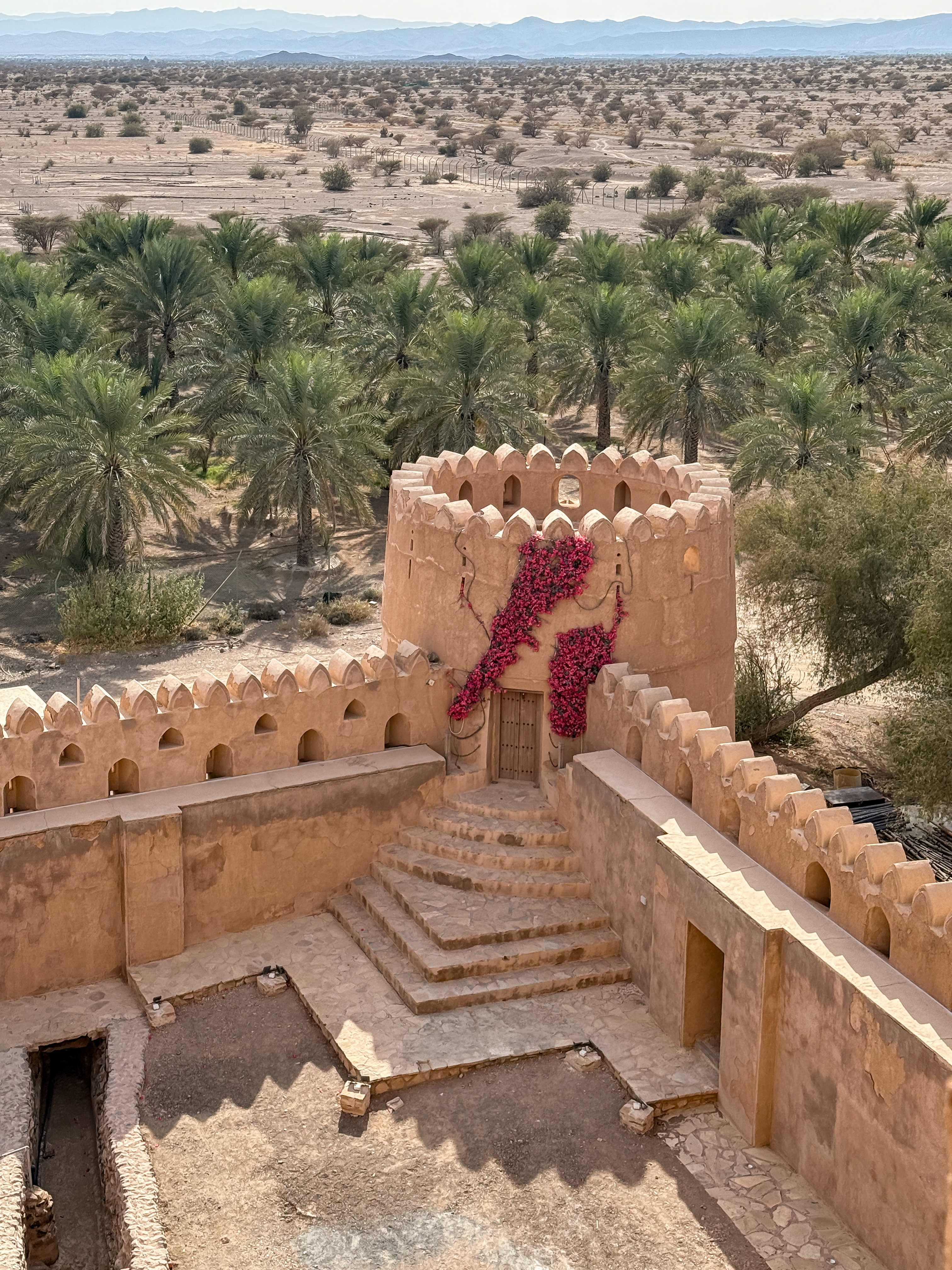
What to See
Al Hamra Mud Village
Birkat al Mouz Village Ruins
Jabreen Castle
Nizwa Fort
Nizwa Souq
Jebel Akhdar
WAHIBA DESERT
DAY 5
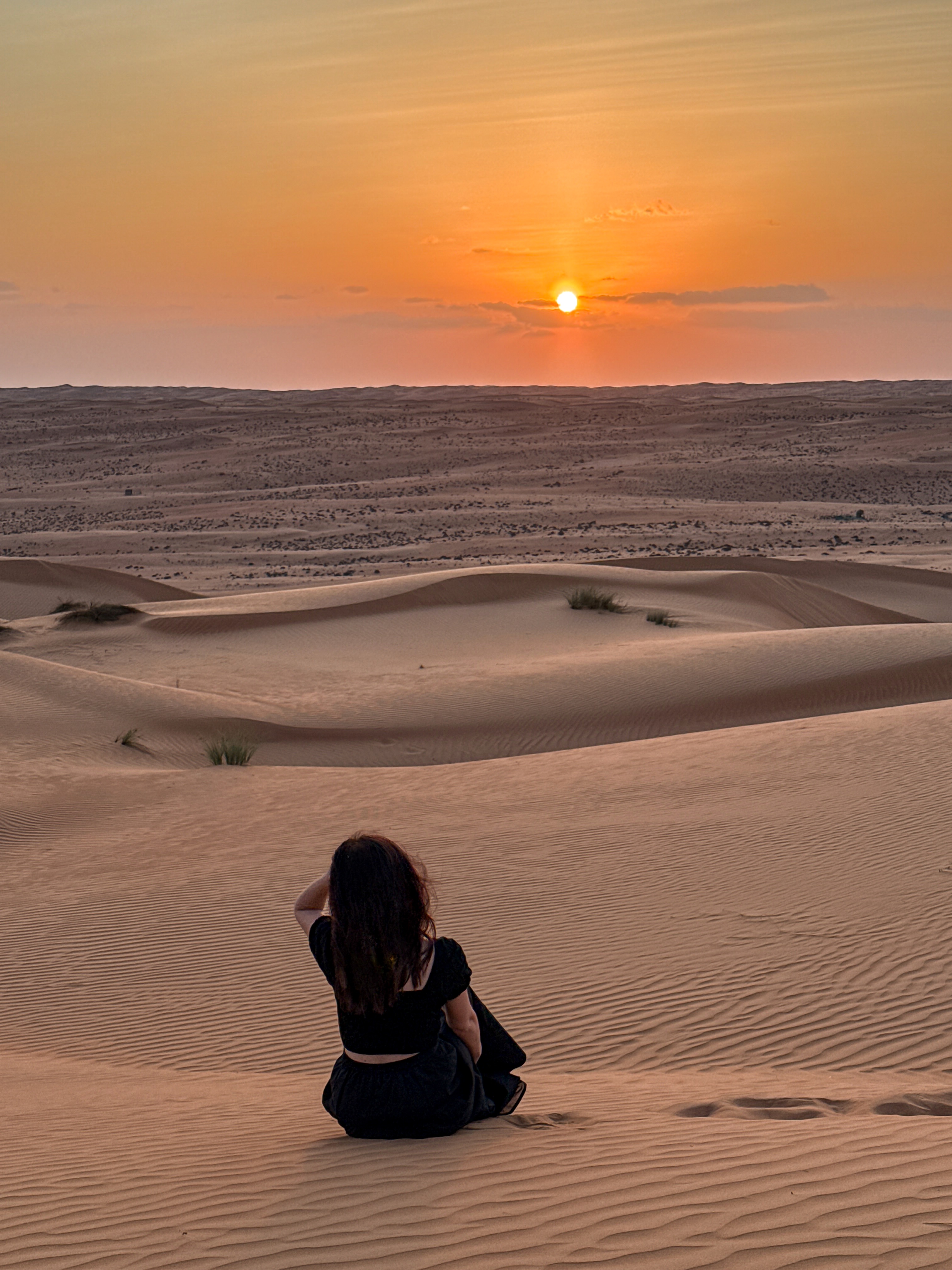
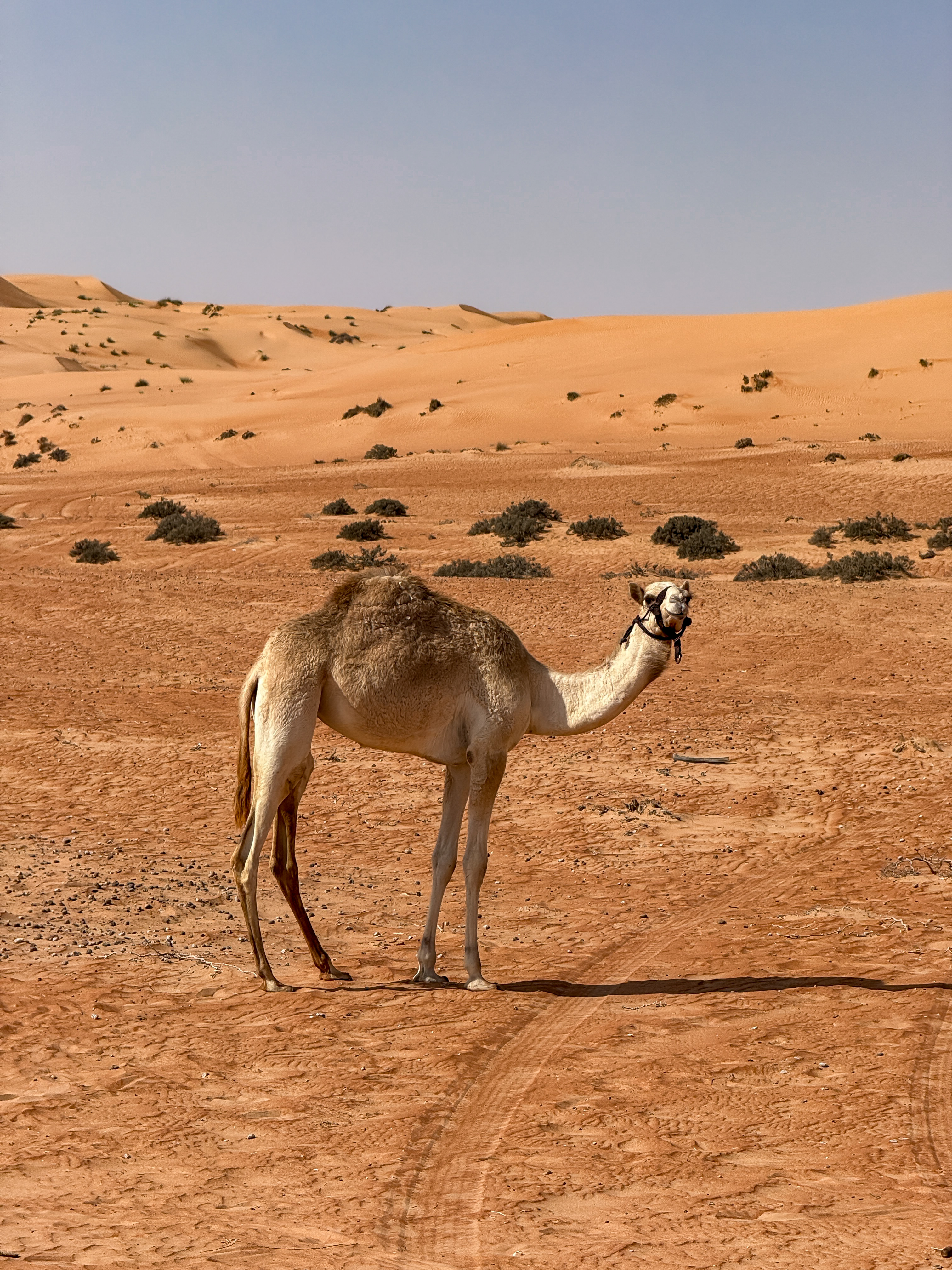

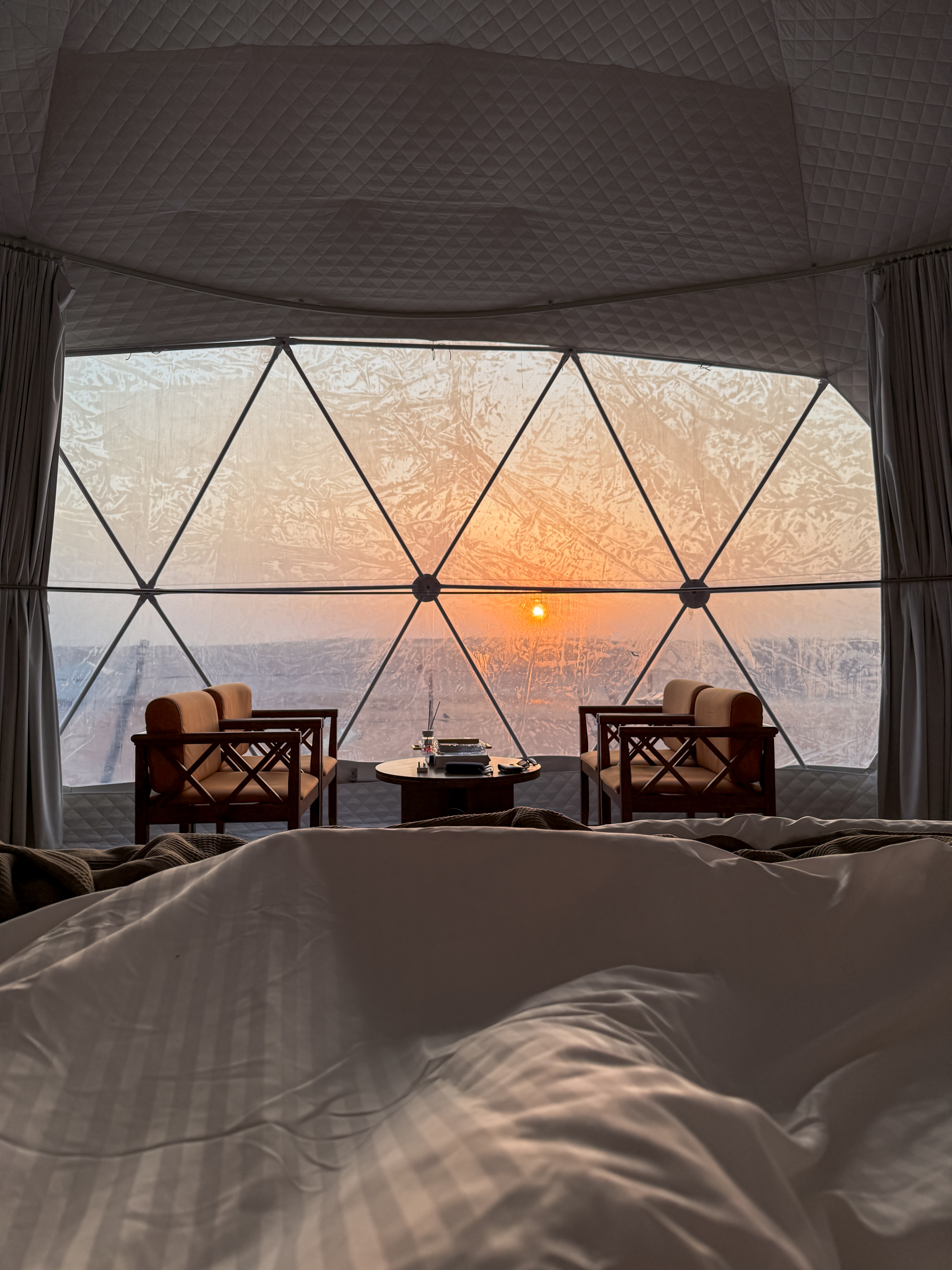
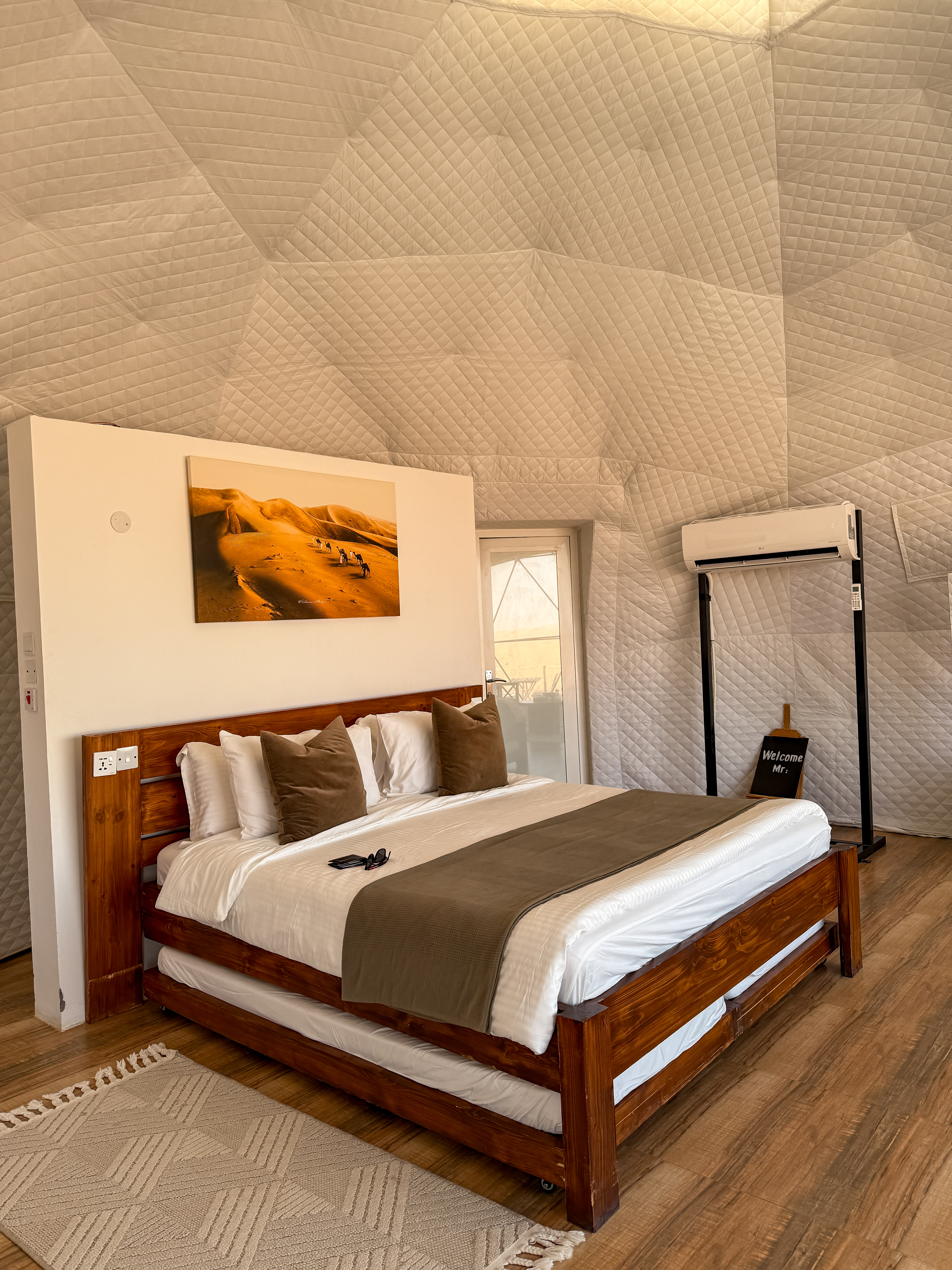
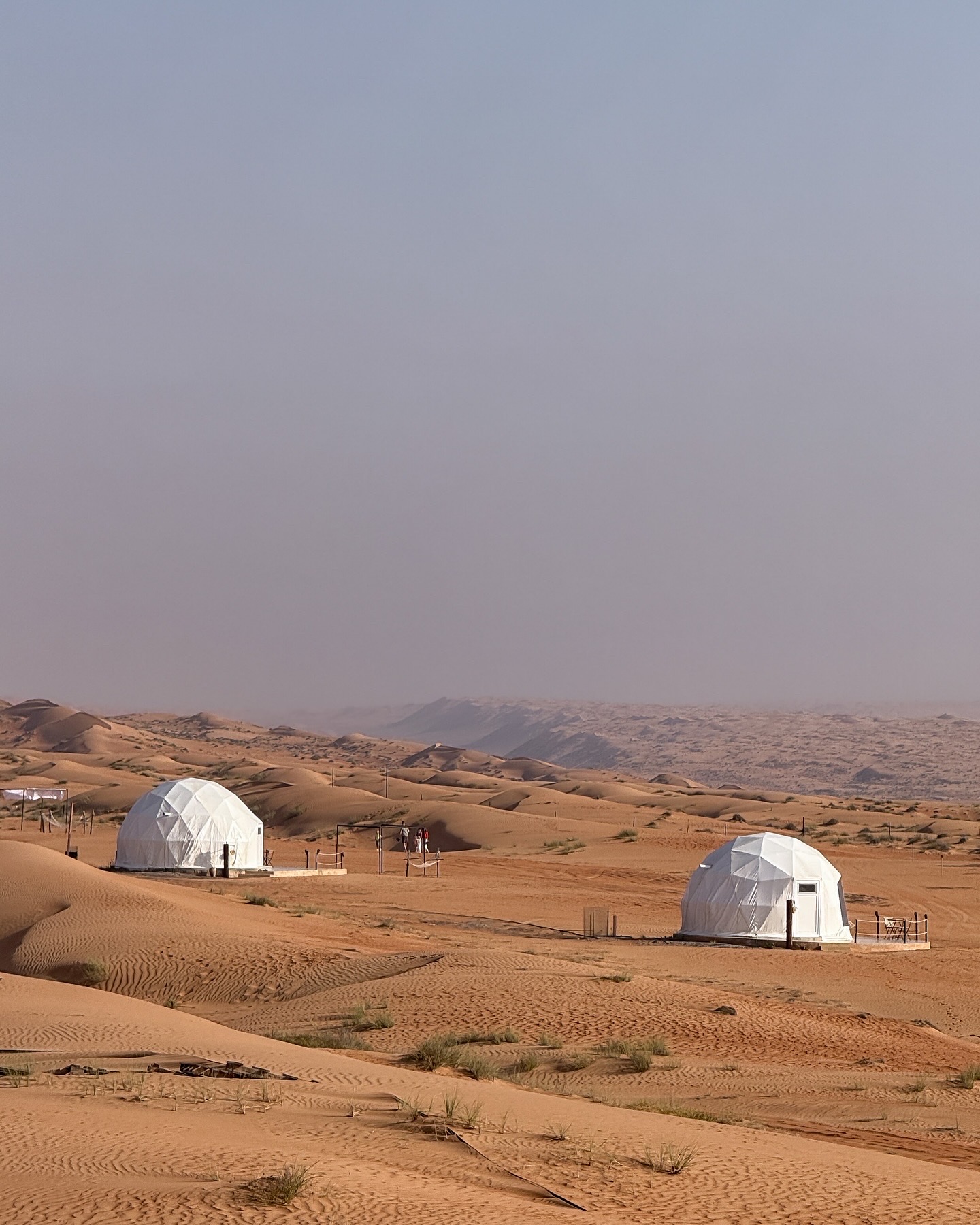
No trip to Oman feels complete without heading out into the desert. Just a three-hour drive from Muscat, the golden dunes of Wahiba Sands are very easy to reach. Spending a night or two in a desert camp is a surreal experience. There are so many camps to choose from, but we chose Milky Way Domes camp, and it was around £150 with breakfast included. You can drive yourself to all of the camps if you have a 4×4 car and are confident you will be able to get there, but we had a normal car, which we left at the place previously agreed with the camp, and they came to pick us up.
At the camp, you can do activities like dune bashing, sandboarding, quad biking, ziplining and a 3-hour-long desert tour, for which you need to stay longer than one night.

WADIS & BIMMAH SINKHOLE
DAY 6
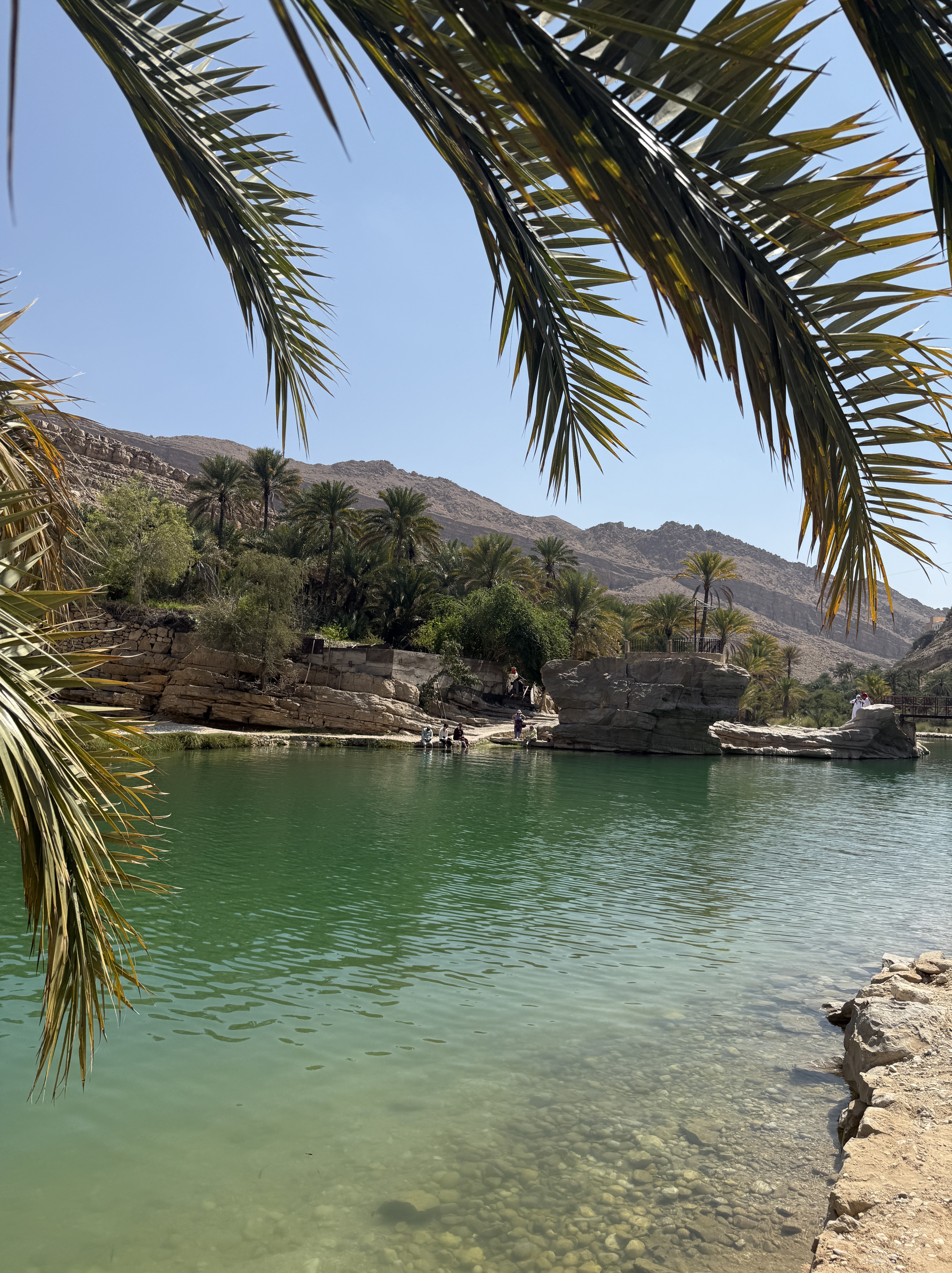
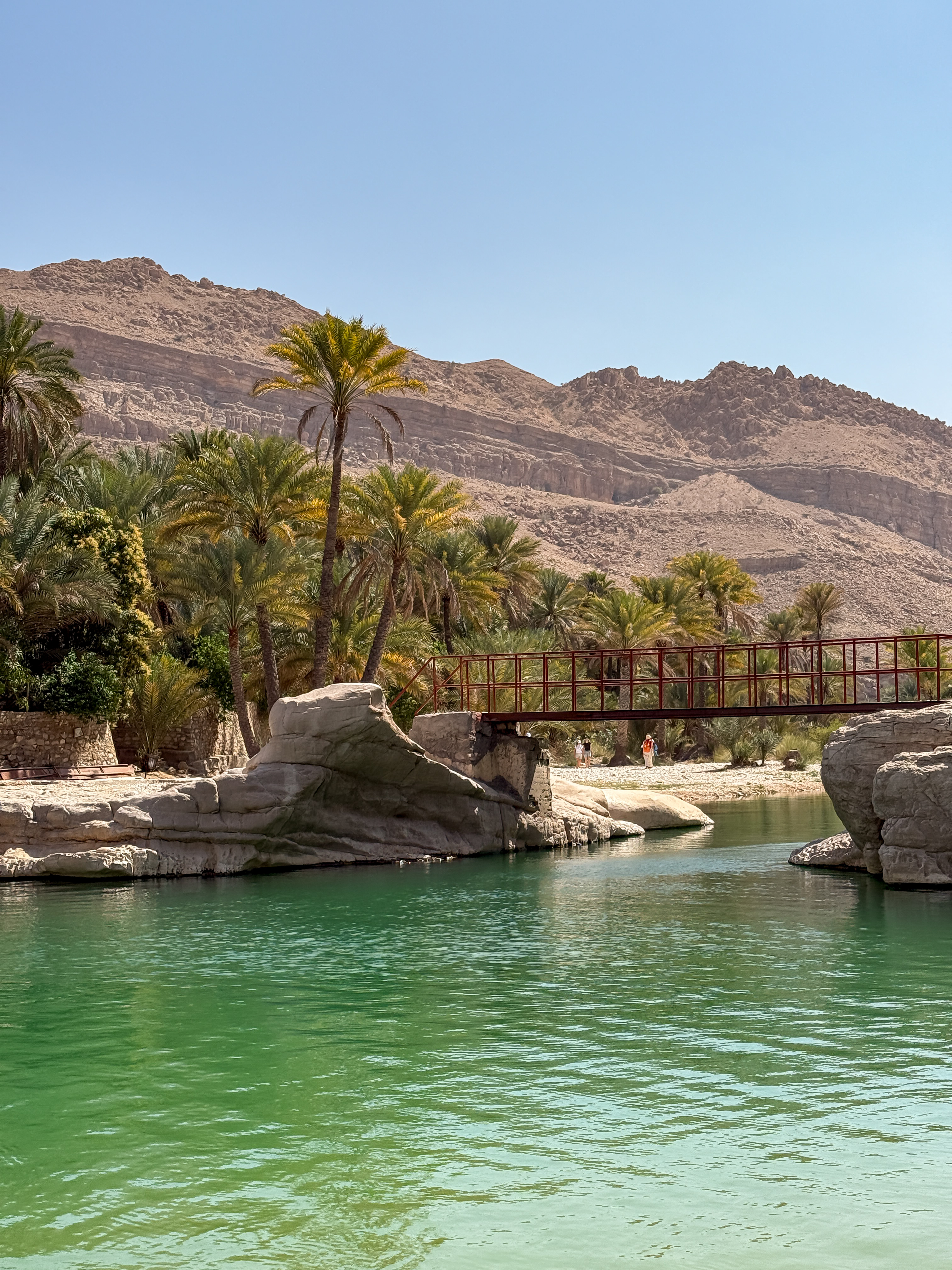
Leaving the camp to go back to Muscat, we stopped at multiple places along the way. One of the country’s most unique attractions is the collection of wadis and sinkholes that stretch from Dibab down to Sur along the Gulf of Oman coastline. The wadis are narrow rocky gorges, typically filled with clear turquoise water, ideal for hiking and swimming.
First stop was the one closest to our camp, Wadi Bani Khalid, the easiest wadi to reach and one of the only wadis with facilities like a restaurant and bathrooms, and hiking is not required.
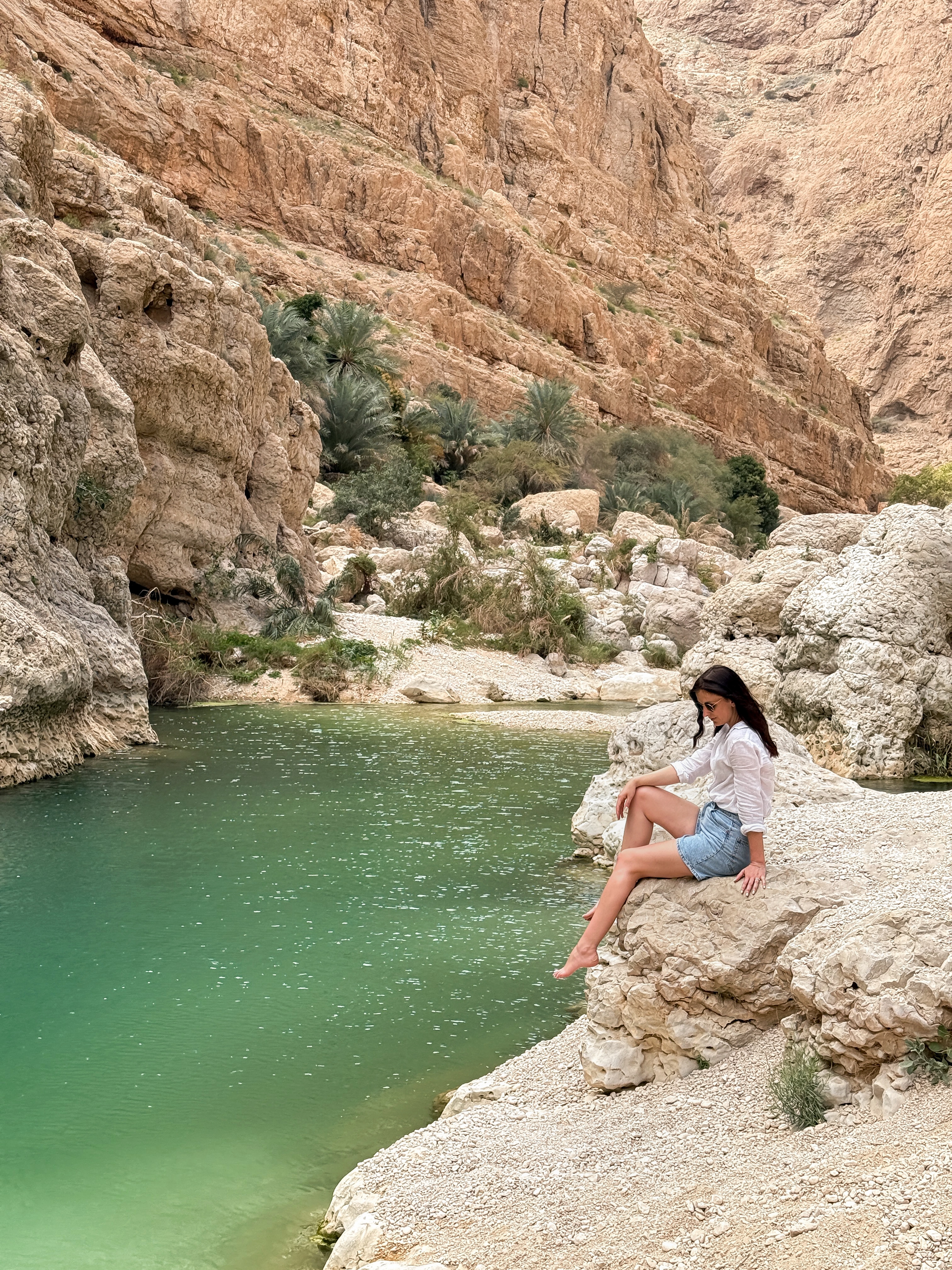
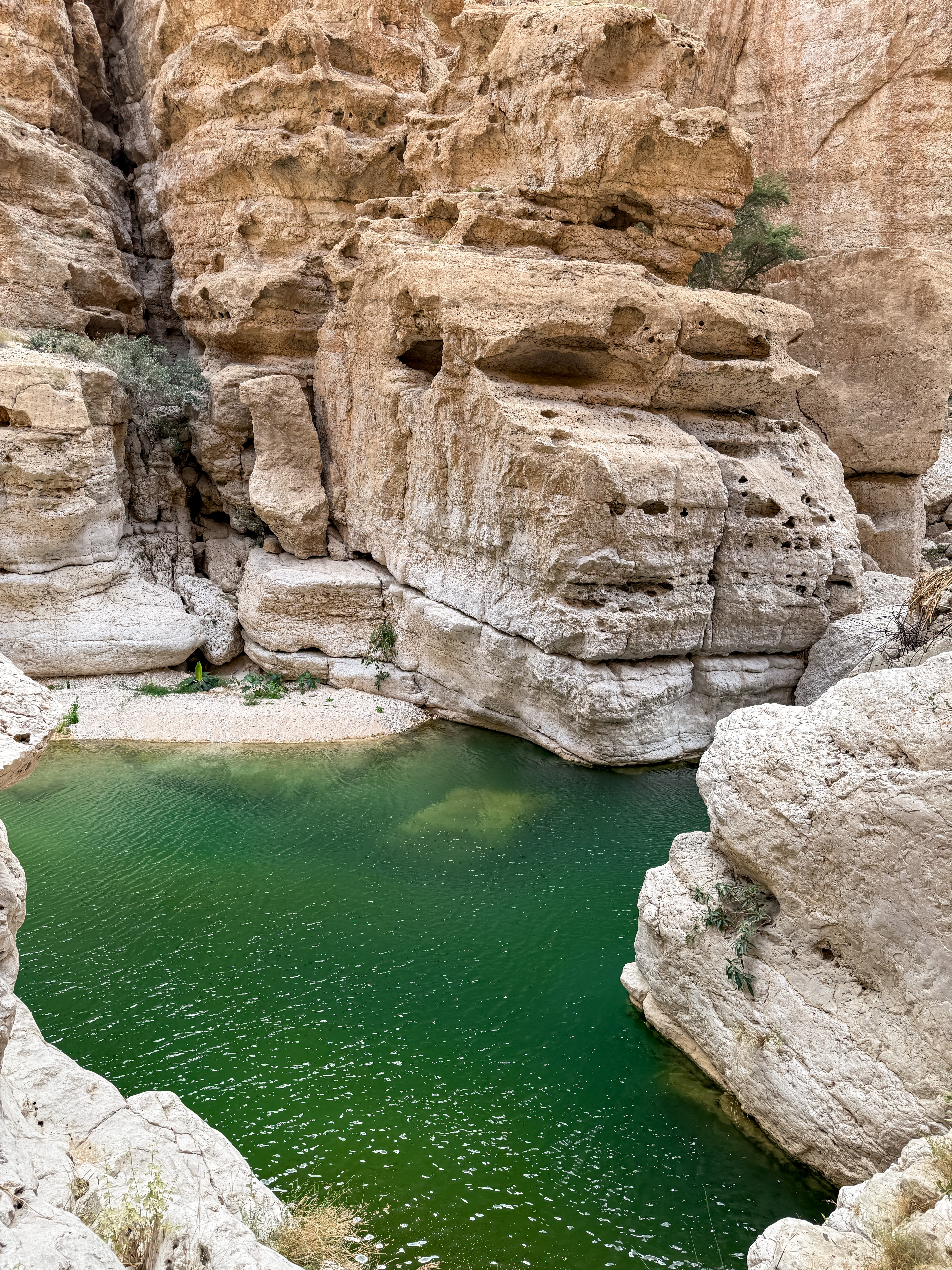
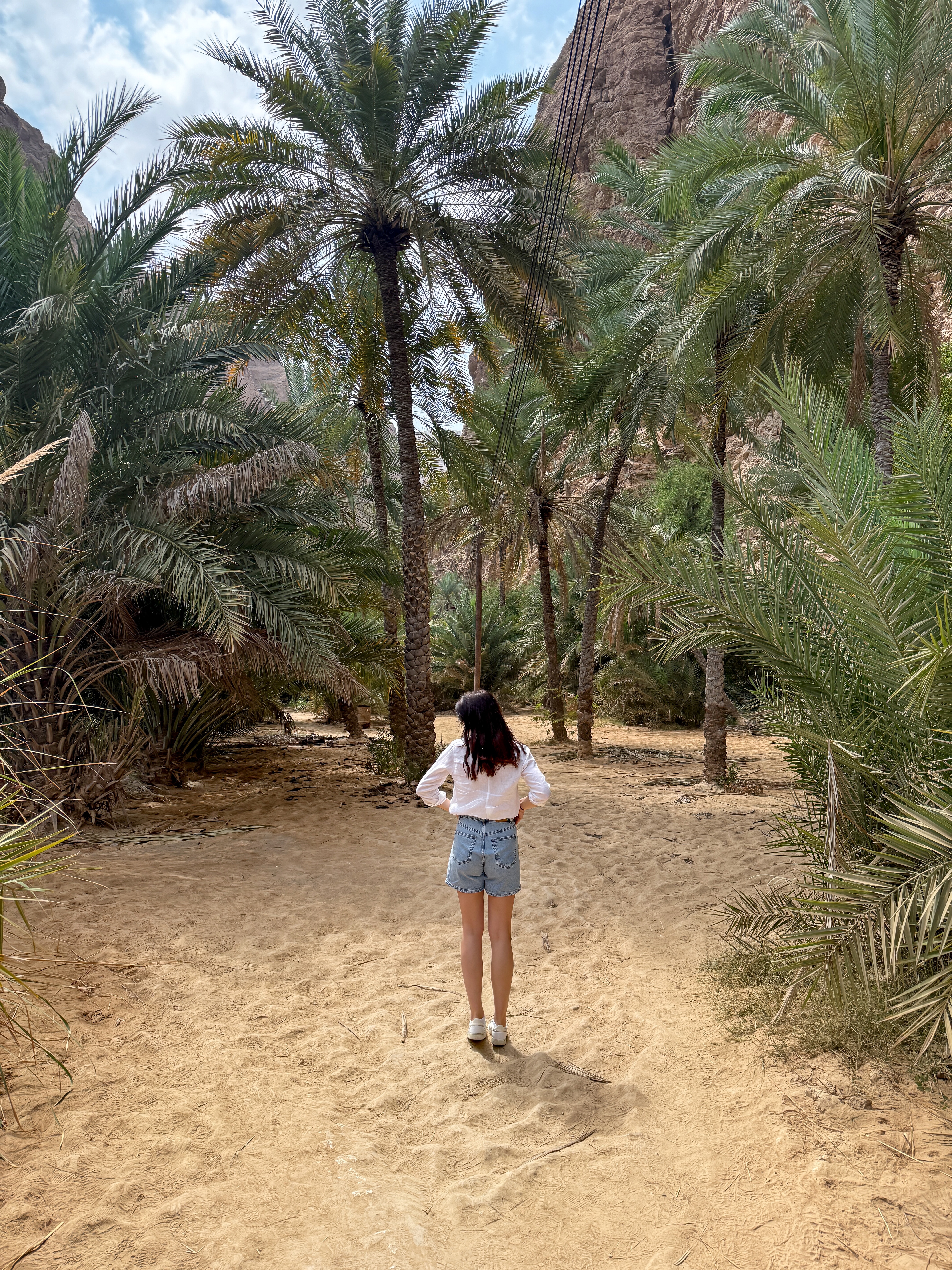
One that is a must-visit is Wadi Shab, the most famous wadi in Oman. To get there, you must follow the instructions for Wadi Shab parking. Parking is free and so is the toilet. I would recommend visiting the small restaurant there for one of the best sandwiches I’ve ever tried!
The journey to Wadi starts with a short, two-minute boat crossing ( 1 OMR per person) and then is a 1.5 km hike through the gorge with the stunning emerland blue pools along the way. The hike is easy and it takes around an hour in one direction. When you reach the end of the walking trail, the only option is to swim which we decided not to do. If you want to do that, make sure to bring waterproof bag for your things and swimming suit.
Bimmah Sinkhole is the most iconic place in Oman. The limestone pool is filled with a mix of both fresh and seawater that together create a stunning shade of deep turquoise.
Personally, I would only stop here to see it, but spend more time at Wadi Shab.
GET AROUND OMAN
Car hire is pretty much essential in Oman. Although many of the main sights can technically be done as day trips from Muscat, the distances are long, and driving is really the only practical way to get around. The good news? It’s an easy, stress-free drive. Roads are wide, quiet, and extremely well-maintained, and with Google Maps it’s almost impossible to get lost.
 wanderwithanita.com